Travel around the world with Countless Cities

The Museum and Biennial of the Cities of the World.

The Making of Countless Cities

A documentary by Salvatore Giglia that retraces the origins and evolution of Countless Cities through the voices of artists, curators, and the pioneering cities of its first four editions. An intimate journey into the ideas, encounters, and visions that shaped a global platform for reimagining the future of cities.

What's on

Palermo, via Maqueda 206

MUSEO delle

CITTA’ del MONDO

Countless Cities 2027

We are living through a time of profound global instability. Democracies are under increasing pressure, civil rights are being eroded, and armed conflicts alongside the climate crisis are reshaping borders, migration, and inequality. In this context, cities are no longer merely places where social life unfolds; they have become the primary arenas where the possibilities for freedom, peace, and human dignity are negotiated and defended. Countless Cities 2027 is born from a fundamental question: what role can cities play today in defending freedom, fostering prospects for peace, and safeguarding the right to inhabit a world marked by global disorder? The Biennial is conceived as an international platform for research, dialogue, and civic imagination. It is not dedicated to the world's most successful or iconic cities, but to the cities that resist, that welcome, and that experiment with new ways of caring for people in an era defined by multiple, interconnected crises.
Viviamo in un tempo di instabilità globale profonda. Le democrazie sono sotto pressione, i diritti civili vengono erosi, i conflitti armati e le crisi climatiche ridisegnano confini, migrazioni e disuguaglianze. In questo scenario, le città non sono più semplici contenitori della vita sociale, ma diventano il principale spazio in cui si giocano le possibilità di libertà, pace e dignità umana. Countless Cities 2027 nasce da una domanda radicale: che ruolo possono avere oggi le città nel difendere la libertà, costruire prospettive di pace e garantire il diritto ad abitare in un mondo attraversato dal disordine globale? La Biennale si configura come una piattaforma internazionale di ricerca e immaginazione civica, non dedicata alle città vincenti o iconiche, ma alle città che resistono, che accolgono, che sperimentano nuovi modi di prendersi cura delle persone in un contesto segnato da crisi multiple e interconnesse.

Novità!

Three Principal Lines of Inquiry

A New Human Freedom Agenda

It explores the relationship between cities, freedom, and human rights. In an era shaped by surveillance, economic inequality, and housing insecurity, freedom is no longer an abstract ideological concept but a tangible condition of everyday life. Cities become the places where real access to housing, employment, mobility, education, and democratic participation is determined—and where the promise of fundamental rights is ultimately tested.

Cities Building Global Peace

It explores the role of cities as actors of peace. In a world marked by wars, polarization, and rising nationalisms, cities are increasingly called upon to respond not only to the social consequences of conflict, but also to the physical destruction of entire urban fabrics. Forced migration caused by war transforms host cities into crucial spaces of welcome, mediation, and coexistence. This thematic strand examines how urban policies, culture, and civic practices can contribute to building infrastructures for peace and fostering dialogue from the ground up.

The Human Value of Dwelling

It addresses the right to housing as a fundamental human right and an essential condition of human dignity. The global housing crisis, already severe in many parts of the world, is set to worsen as wars continue to destroy cities and displace millions of people. Housing is not merely an architectural or urban planning issue; it is a prerequisite for safety, belonging, stability, and the possibility of rebuilding one's life. The Biennial explores alternative housing models, the adaptive reuse of urban heritage, and new forms of community capable of responding to an increasingly urgent and global demand for dignified places to live.

“I will never leave my home ALIVE” - Nazareth Pavilion

Ex Carcere San Vito- Agrigento

Through a multi-modal artistic presentation of photographs, sound installation, digital sonic map and art installation, the pavilion will display the interaction between threads ; concrete and zinco, to embody the violent spatial and architectural transformations of Al souk genuine urban fabric, aimed to conceal Palestinians and disconnect them from their organic growth, causing their disappearance and removal. Within the gaps of uncertainty where people live surrounded with ruins; abandonment; layers of random cheap structures and alien materials concealing heritage houses and winding alleys ; misused micro- public spaces for waste ; and the absence of safety through the spread of crime ; all are a combination of a dissonance urbanscape and urban environment, pushing people away, not only out of Nazareth, but even out of palestine. Despite all these methods  Can Palestinians reappropriate hidden spaces as a mean to reclaim? Reclaim what was stolen, their dreams, passions, imagination and hope!! The overall concept is to discover  spaces that evoke a sense of absence and loss.  Addressing existing architectural heritage not only for its physical presence but rather what is forgotten, stolen and missing from it, where the absence of those who participated in shaping these spaces and its identity, become a powerful architectural tool for palestinian presence reclamation.

Attraverso una presentazione artistica multimodale composta da fotografie, video, installazione sonora, mappa sonora digitale e installazione artistica, il padiglione mette in scena le violente trasformazioni spaziali e architettoniche del tessuto urbano autentico di Al Souk. Trasformazioni pensate per occultare i palestinesi e disconnetterli dalla loro crescita organica, provocandone la scomparsa e la rimozione. Negli interstizi dell’incertezza, dove le persone vivono circondate da rovine, abbandono, strati di strutture casuali e a basso costo e materiali estranei che occultano case storiche e vicoli tortuosi; dove micro-spazi pubblici vengono impropriamente utilizzati come discariche; e dove l’assenza di sicurezza, dovuta alla diffusione della criminalità, è costante — tutto concorre a un paesaggio urbano dissonante e a un ambiente che respinge le persone, spingendole non solo fuori da Nazareth, ma persino fuori dalla Palestina. Nonostante questi metodi, possono i Palestinesi riappropriarsi dei loro luoghi come mezzo di riscatto? Riscattare ciò che è stato sottratto: sogni, passioni, immaginazione e speranza. Il senso complessivo è quello di scoprire spazi che evocano un senso di assenza e perdita, affrontando il patrimonio architettonico esistente non solo per la sua presenza fisica, ma per ciò che in esso è dimenticato, rubato e mancante. L’assenza di coloro che hanno contribuito a plasmare questi spazi e la loro identità diventa così un potente strumento architettonico di rivendicazione della presenza palestinese.

We believe necessary for artists and exhibitions to become nomads and to cross frontiers both physically and mentally. Overcoming national borders, allow languages and cultures to spread in all directions, to widen the horizon of translation skills.

Riteniamo necessario che artisti e mostre diventino nomadi e attraversino le frontiere sia fisicamente che mentalmente. Superare i confini nazionali significa permettere alle lingue e alle culture di diffondersi in tutte le direzioni, ampliando l’orizzonte delle capacità di comprensione reciproca.

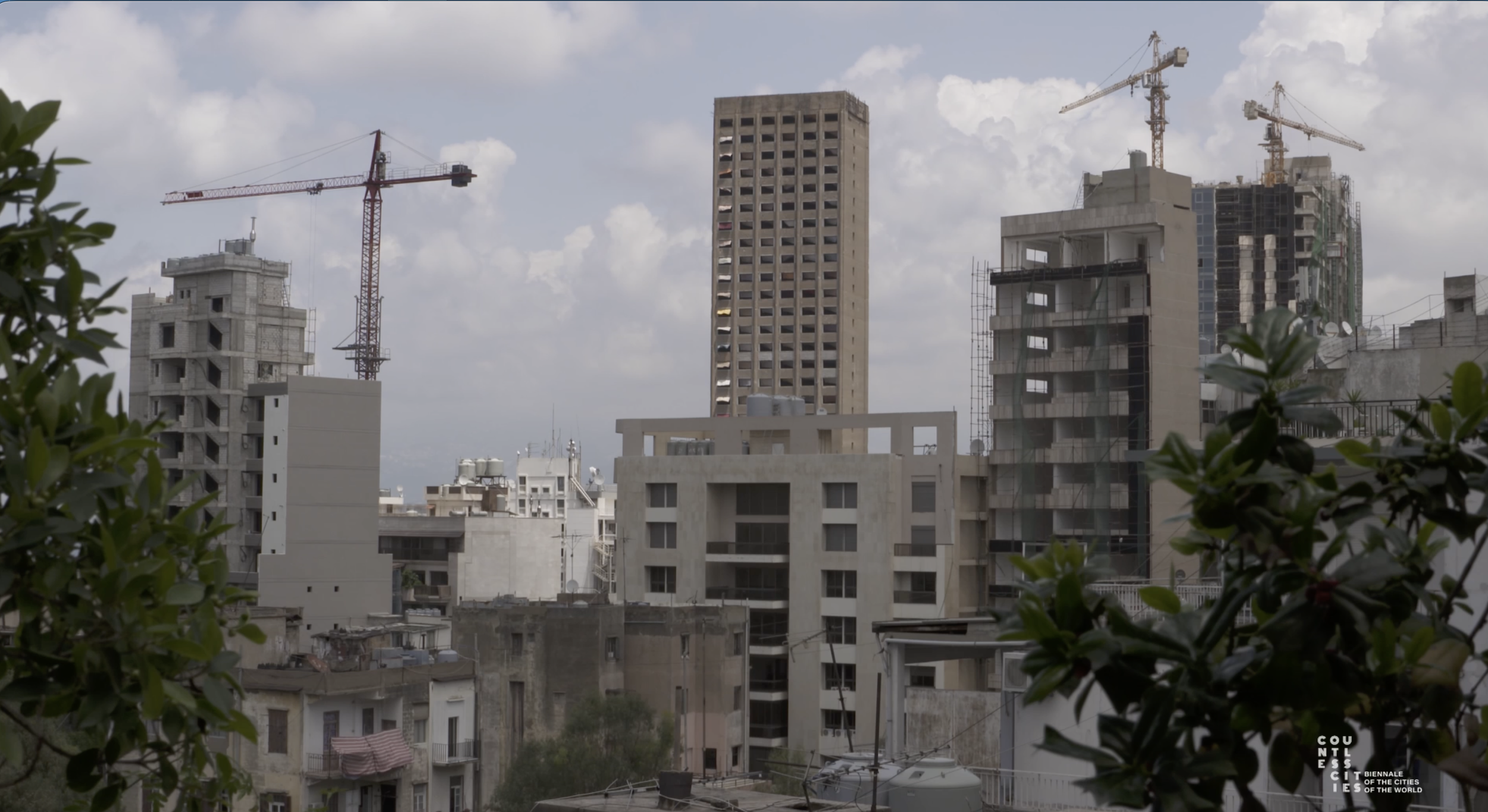
Over the course of its four editions, the Biennale has addressed protest movements in the suburbs of London linked to the challenges of gentrification, as well as those of students in Hong Kong and farmers in New Delhi. We have explored complex places such as Cairo’s “Garbage City,” the “Villas Miseria” of Buenos Aires, and “Guapira II” in São Paulo, and we have proposed the rediscovery and regeneration of symbolic sites such as Fuerte Cultural Park in Caracas and Burj El Murr in Beirut.

Our journey has been enriched by the work of cultural activists Razan Zoubi-Zeidani in Nazareth, Lyra Aoko and Michael Soi in Nairobi, Nana Zaalishvili in Tbilisi, Ali Matay in Izmir, Erika Linenfelser in Detroit, and Corben Mudjandi in Jabiru, along with many other artists, curators, and creatives from all over the world.

Nel corso delle sue quattro edizioni, la Biennale ha affrontato i movimenti di protesta nelle periferie di Londra legati ai problemi della gentrificazione, così come quelli degli studenti di Hong Kong e degli agricoltori di New Delhi. Abbiamo raccontato luoghi complessi come la “Garbage City” del Cairo, le “Villas Miseria” di Buenos Aires o “Guapira II” a San Paolo, e abbiamo proposto la riscoperta e la rigenerazione di luoghi simbolici come il Fuerte Cultural Park di Caracas o il Burj El Murr di Beirut.

Il nostro percorso è stato arricchito dall’attivismo culturale di Razan Zoubi-Zeidani a Nazareth, Lyra Aoko e Michael Soi a Nairobi, Nana Zaalishvili a Tbilisi, Ali Matay a Smirne, Erika Linenfelser a Detroit e Corben Mudjandi a Jabiru, insieme a numerosi altri artisti, curatori e creativi provenienti da ogni parte del mondo.

“Countless Cities” has also become a great event that brings hundreds of artists, architects, and curators to Sicily every two years, as well as a few hundred thousand visitors. This splendid opportunity promotes intercultural understanding and dialogue between different urban communities, breaking down barriers and prejudices, promotes greater interaction and connection between people from different backgrounds, and strengthens networks and collaborations between municipalities, diplomatic missions, cultural institutions, artists, organizations and research institutes on a global level. These partnerships often last over time and lead to further shared projects and initiatives. Moreover, the Biennale has become a great attraction for tourists and visitors interested in culture and the future of cities, generating important economic benefits for Favara and, today, also Mazzarino, Agrigento and Palermo, contributing to an increase in their prestige and international visibility.

“Countless Cities” è diventata anche un grande evento che, ogni due anni, porta in Sicilia centinaia di artisti, architetti e curatori, oltre a qualche centinaio di migliaia di visitatori. Questa straordinaria opportunità favorisce la comprensione interculturale e il dialogo tra diverse comunità urbane, abbattendo barriere e pregiudizi, promuovendo una maggiore interazione e connessione tra persone provenienti da contesti differenti e rafforzando reti e collaborazioni tra comuni, missioni diplomatiche, istituzioni culturali, artisti, organizzazioni e istituti di ricerca a livello globale.

Queste partnership spesso si consolidano nel tempo e danno vita a ulteriori progetti e iniziative condivise. Inoltre, la Biennale è diventata una forte attrazione per turisti e visitatori interessati alla cultura e al futuro delle città, generando importanti benefici economici per Favara e, oggi, anche per Mazzarino, Agrigento e Palermo, contribuendo ad accrescerne il prestigio e la visibilità internazionale.

Which City do you feel you belong to?

A quale città senti di appartenere?

Past editions

  • 2025

    We live in a “society of conflict.” From personal tensions to global wars, conflict is everywhere—between people, generations, cultures, and even between humans, nature and technology. The real challenge today is not to eliminate conflict, but to learn how to transform it into dialogue, cooperation and peace. The true superpower is the ability to build and nurture meaningful relationships. Research shows that strong relationships improve health, resilience and quality of life. Countless Cities explores how cities can become spaces where conflicts are transformed into lasting relationships of value and positive change.

  • 2023

    Is there an ideal city? This profound question likely inspired architect Paolo Soleri to design and build Arcosanti, a visionary urban experiment in the Arizona desert. Similarly, it drove Pastor Tullio Vinay of the Waldensian Community to establish Monte degli Ulivi in Riesi, a center for social and cultural renewal in Sicily. Both projects embody the search for a harmonious balance between human habitation and the environment, offering alternative models of community that challenge conventional urban planning

  • 2021

    Shifting the axis of research from the state dimension to that of cities means opting for a more human approach. It means embracing an idea of design that provides concrete solutions to improve the living conditions of people within urban spaces, across all latitudes, by fostering inclusivity and sustainability. This approach sows dreams, hopes, and the desire to act, encouraging communities to reimagine their environments. By focusing on cities, we address challenges at a scale that directly impacts people's daily lives, promoting a future where urban spaces are not just functional, but also vibrant and equitable

  • 2019

    We portrayed the Africa that was not commonly depicted—the Africa of the new generations, of new forms of leadership and governance, of sustainable development. It was more necessary than ever to propose alternative models to Matteo Salvini's policies; we were absolutely against the politics of fear and firm advocates of the importance of building and maintaining international political, diplomatic, and cultural relations. Furthermore, quite frankly, we had had enough of the stereotypical narrative of Africa as a place of war, famine, and calamity."

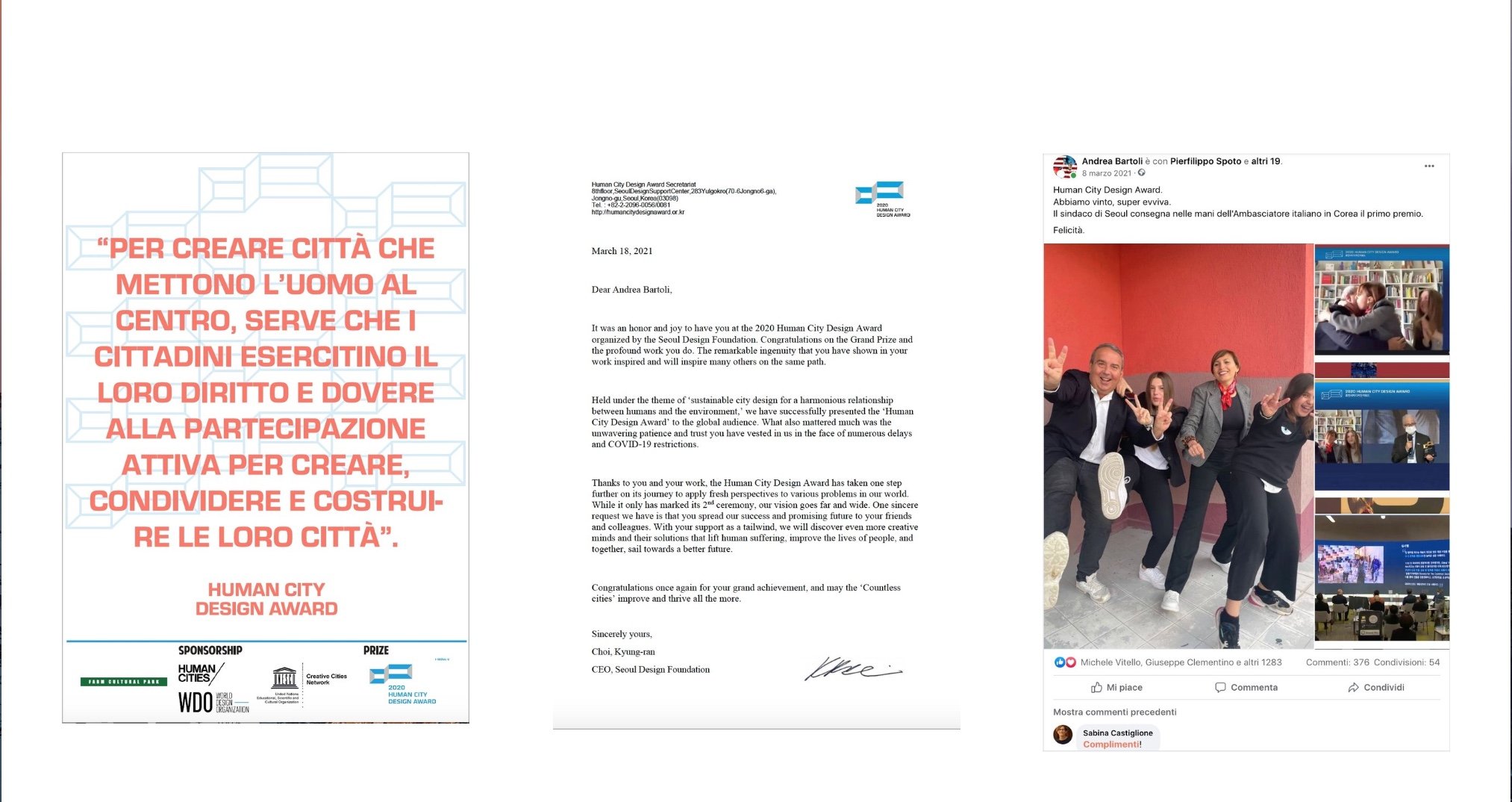
Winner

Human Design City Award

 
Yazd - Iran courtesy Giulio Di Meo

“Countless Cities” has been and continues to be a great challenge for Farm Cultural Park. We are confronted with a complex and ambitious project that is, at the same time, cohesive with our mission: to improve not only ourselves but the cities we live in. We felt the need for a broader view, to have a large cultural container that, every two years, would allow us to understand what makes a city unique, how it works, and why we feel fascinated by some cities more than others.

“Countless Cities” è stata e continua a essere una grande sfida per Farm Cultural Park. Ci confrontiamo con un progetto complesso e ambizioso che, allo stesso tempo, è pienamente coerente con la nostra missione: migliorare non solo noi stessi, ma anche le città in cui viviamo.

Abbiamo sentito il bisogno di uno sguardo più ampio, di un grande contenitore culturale che, ogni due anni, ci permettesse di comprendere che cosa rende una città unica, come funziona e perché alcune città ci affascinano più di altre.